


Winnicott, Derrida, Rebecca, The Traitors and the Stories We Tell
Have you ever walked into a room and felt that everyone else has been given a set of instructions you somehow missed? You become acutely aware of yourself: how you speak, where you stand, whether your joke was funny or everyone is simply being polite. Before long, you’re less interested in what you think about the room than in what the room might think about you.
Most of us know the feeling. We adjust, accommodate and occasionally laugh at jokes we don’t find funny. But there’s a difference between adapting to other people and gradually losing sight of ourselves in the process.
I’ve been thinking about this while returning to Daphne du Maurier’s Rebecca, the psychoanalytic ideas of Donald Winnicott and, rather unexpectedly, The Traitors. There’s also a thread of deconstruction running through these ideas, associated especially with the French philosopher Jacques Derrida. Put simply, deconstruction invites us to look twice at what seems obvious, question the categories we take for granted and notice how meaning is made rather than simply accepting it as fixed. It isn’t about declaring that nothing means anything; it’s about asking what a seemingly settled meaning depends on, and what or whom it leaves out.
That may sound rather grand for a gothic novel and a television programme in which people accuse one another over breakfast. But the question underneath is an everyday one: how much of ourselves do we give away trying to belong, and how certain can we ever be that the stories we tell about ourselves and others are the whole truth?
The woman who wasn’t even there
In Rebecca, the unnamed narrator marries Maxim de Winter and arrives at Manderley, his imposing country estate. It is beautiful, historic and full of atmosphere. It is also, from her perspective, a psychological obstacle course.
Her predecessor, Rebecca, is dead, but her presence seems to occupy every room. She is remembered as beautiful, confident, capable and socially accomplished. Imagine moving into your new home only to discover that the previous occupant was apparently brilliant at everything. She dressed beautifully, entertained effortlessly and seems to have left behind a devoted fan club. Even the housekeeper appears to consider you a regrettable administrative error.
The narrator has never known Rebecca. She encounters her through other people’s accounts, the traces she has left behind and the atmosphere of Manderley itself. She begins comparing herself with someone she cannot fully know.
This is where Derrida’s approach to deconstruction becomes useful. Rather than accepting the apparent opposition between Rebecca and the second Mrs de Winter as natural, it asks us to look at how it is built: confident versus timid, accomplished versus awkward, ideal versus inadequate. The more the narrator accepts these categories, the more inevitable her own inferiority seems. But the categories begin to wobble when we ask who has created this image of Rebecca, which details are being remembered or withheld, and whose interests are served by preserving her as an ideal.
Rebecca is more than a projection of the narrator’s insecurity: she was a real person with desires and secrets of her own. As the story unfolds, the seemingly perfect image of the first Mrs de Winter grows more complex. The Rebecca remembered at Manderley may not be the woman she truly was. That gap between image and reality matters because the apparent truth rests on partial accounts, selective memories and the perspectives of those who tell the story.
And yet the image has power. The narrator measures herself against an ideal she cannot question or challenge. We do something similar when we compare ourselves with fragments of other people’s lives: the colleague who always knows what to say, the friend whose house looks suspiciously tidy, or the stranger online who appears to have achieved professional fulfilment, domestic harmony and excellent lighting. We fill in the gaps, turn fragments into a coherent story, then compare our complicated selves with the person we have imagined.
The trouble begins when that story becomes the measure of our worth. The narrator is not simply competing with Rebecca; she is trying to find a place in a world that seems to have decided what a Mrs de Winter should look like before she arrived.
Winnicott and the art of being acceptable
Donald Winnicott offers a different but complementary way to think about this predicament. He was interested in how a sense of self develops within relationships, particularly through the experience of being met, understood and responded to by others. His distinction between the true self and the false self can help us consider what happens when the wish to belong begins to shape who we feel allowed to be.
The false self is not simply a mask worn by someone being dishonest. Winnicott described how we may adapt to other people’s expectations to maintain connection, avoid rejection or preserve a sense of safety. Some adaptation is essential. Tact has its uses, and most workplaces would struggle if every passing irritation became an invitation to speak our minds.
The difficulty arises when adaptation becomes so habitual that we lose touch with our own feelings, preferences and impulses. We become skilled at working out what others want from us, but less certain about what we want ourselves. We become very good at reading the room, but less certain about whether we actually want to be in it.
Seen through this lens, the narrator’s difficulties at Manderley are about more than shyness. She is trying to work out how to be the right sort of wife in a world where Rebecca appears to have set the standard. Her attention turns towards imagined expectations, leaving little space to discover what she herself feels or wants.
Derrida’s work on deconstruction adds a useful question: what if the categories we’re trying to fit into aren’t as natural or stable as they seem? “Good wife”, “confident woman”, “successful person” and “easy-going colleague” can look like self-evident ideals, but they are shaped by culture, relationships and power. Who gets to define them? What qualities are praised, and which are quietly dismissed? The point isn’t that all expectations are meaningless; it’s that we can examine them instead of treating them as laws of nature.
Winnicott helps us think about the personal cost of living under those expectations. Deconstruction helps us question the expectations themselves. Together, they invite us to ask whether our adaptations remain choices, or have become the only way we know how to belong.
When home doesn’t feel like home
Manderley appears to offer everything associated with security and belonging. It is established, beautiful and full of history. Yet the narrator struggles to feel at home there.
Winnicott’s concept of the holding environment helps illuminate this contradiction. He used the term to describe the dependable care and emotional conditions that allow a person to feel sufficiently secure to develop. In broader terms, holding means being able to exist in a relationship without constantly monitoring how we are being received. It doesn’t require perfection, only enough reliability and room for someone to have feelings of their own.
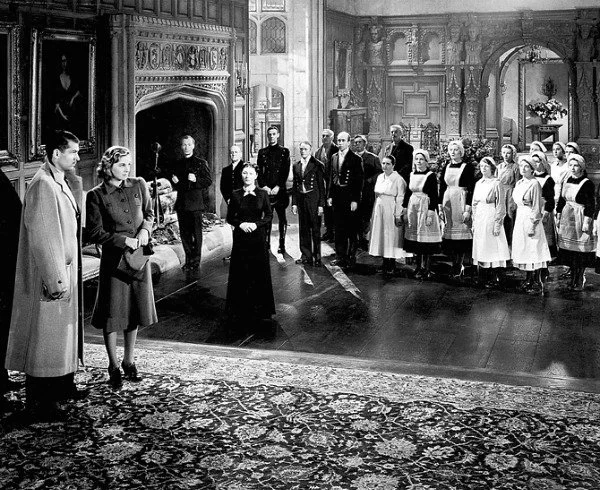
Manderley provides the narrator with a house, but not the emotional ease she needs to settle into her place within it. Its traditions leave little room for her uncertainty. The housekeeper, Mrs Danvers, with her devotion to Rebecca and her treatment of the new Mrs de Winter, reinforces the sense that the narrator is occupying a role she cannot possibly fulfil. Her insecurity is not simply internal; the world around her reinforces it.
This is where Winnicott’s idea of holding and Derrida’s deconstruction meet. We might ask not only whether the narrator feels safe, but what kind of person Manderley allows her to be. Which behaviours are rewarded? Which are made to look foolish or inadequate? What kinds of femininity and belonging does the house preserve? The setting is not a neutral backdrop: its rituals and stories help organise what can be thought, felt and expressed.
We sometimes talk about confidence as though it were a personal possession, something we either have or need to acquire. Yet how we feel about ourselves is affected by the relationships and environments we inhabit. Some people make it easier to speak, experiment and admit mistakes. Around others, we carefully edit our words before we have worked out what we want to say. Some places let us breathe; others make us acutely conscious of taking up space.
Transference, idealisation and the stories we inherit
Transference offers another lens. In psychoanalytic thinking, it describes how feelings and expectations shaped in earlier relationships can become active in present ones. We do not enter every relationship with a blank slate; sometimes we respond not only to the person in front of us, but also to what that person comes to represent.
This offers one possible way to think about the narrator’s relationship with Maxim. His emotional distance, his authority within Manderley and his connection to Rebecca contribute to her uncertainty about her place in his life. The novel does not give us enough psychological history to identify a specific childhood pattern, but we can explore how her fears and expectations shape her experience of the marriage.
Rebecca’s role is different. Because the narrator never knew her, it is more precise to think about idealisation and internalisation than straightforward transference. The narrator encounters an image of Rebecca constructed through other people’s memories, the atmosphere of Manderley and her own growing insecurity. Over time, that image becomes an internal standard against which she judges herself. Rebecca does not have to criticise her; the narrator has begun to do the work herself.
Following Derrida, a deconstructive reading asks us to look at what holds that image together. Which stories about Rebecca are repeated? Which details are omitted? Why is confidence read as evidence of superiority, while the narrator’s uncertainty becomes evidence of inadequacy? Once we notice the choices and exclusions involved in constructing the image, it becomes harder to treat it as the whole truth.
This doesn’t mean there is no truth, or that every interpretation is equally convincing. It means that what we know is shaped by perspective, language and what has been left unsaid. Sometimes the most powerful voice in the room is one we have internalised. It is worth asking whose expectations we are trying to meet, what we actually know, and what might change if we stopped treating an imagined ideal as a set of instructions.

Enter The Traitors
Now, from the corridors of Manderley to a Scottish castle full of suspicious glances.
At first, The Traitors might seem an unlikely companion to Rebecca. One is a novel about marriage, memory and an absent woman; the other is a television game built around deception. Yet both explore what happens when we try to understand people we cannot fully know.
Contestants make judgements with incomplete information. They scrutinise gestures, conversations and changes in behaviour. A quiet contestant may seem secretive, while a confident one may appear persuasive—or perhaps a little too persuasive. A nervous laugh can suddenly acquire the significance of a signed confession. Speak too little and you’re hiding something. Speak too much and you’re trying too hard. At some point, it must be tempting to conclude that the only trustworthy person is the one who has gone home.
Of course, some contestants really are concealing their identities. Suspicion is part of the game. But once someone becomes a suspect, almost anything they do can begin to look like evidence. This is a neat example of how an interpretation can start organising what we notice: details that support the theory stand out, while details that complicate it may be ignored.
The comparison with Rebecca is not that the situations are the same. The narrator is living in the shadow of an inherited image; the contestants are constructing images of one another in the absence of certainty. But in both cases, a story can become more persuasive than the evidence beneath it. The narrator measures herself against the Rebecca she believes everyone admired. The contestants may respond to their idea of another player rather than to what that person has actually done.
Winnicott’s ideas do not explain every aspect of the programme, and deliberate deception should not be confused with the false self. Nor is every mistaken judgement projection. Confirmation bias, group pressure and strategic reasoning all play a part. The connection to Derrida’s deconstruction is more modest: look at how a label such as “traitor” or “faithful” changes the meaning of everything that follows. The same gesture can be read as loyalty or calculation depending on the story already in play.
And this isn’t confined to a castle where breakfast is followed by accusations of treachery. We may decide that a colleague dislikes us, that a friend is being distant, or that someone’s confidence means they think they are better than us. We can start responding to our interpretation rather than checking whether it reflects the other person’s experience.
For Derrida, deconstruction isn’t about declaring that nothing means anything. It is an invitation to look again: what assumptions are shaping my reading? What doesn’t fit? Whose perspective is missing? Can I allow for another explanation? Rebecca shows how an idealised image can shape our sense of self; The Traitors shows how uncertainty can shape our understanding of others. Both remind us that our stories matter, but they are never the same thing as the whole person.

Finding room to be yourself
Winnicott’s idea of the true self is not an invitation to uncover a perfectly formed identity hidden beneath our social roles. It points towards the capacity to feel alive in our own experience, to express ourselves spontaneously and to have feelings and wishes without immediately reshaping them for someone else.
He also wrote about play and the importance of a potential space between inner and outer reality. Play extends beyond childhood: it involves creativity, exploration and the freedom to discover something without already knowing what the outcome must be. We need spaces in which we can experiment, change our minds and make mistakes without feeling that every uncertainty threatens our place in the world. A reliable therapeutic relationship can offer this kind of space, as can friendships and intimate relationships that make room for difference.
There is a gentle connection here with Derrida’s deconstruction, too. If the meanings and categories that shape us are not fixed forever, then we can revisit them. We can ask whether a role still fits, whether a familiar story is fair, or whether a quality we have learned to hide might have a place after all. This isn’t about rejecting every expectation or becoming endlessly suspicious of our own thoughts. It is about creating enough space to examine them.
The challenge is not to stop caring what others think. We are relational beings, and other people’s responses matter. It is to notice when the wish to belong begins to cost us too much, or when we mistake an inherited judgement for an objective truth.
I keep returning to the narrator of Rebecca, trying to find her place in a world haunted by a woman she never knew. Her predicament is an exaggerated version of something many of us recognise: the feeling that we must become someone else before we can be accepted. Perhaps we do not need to stop comparing ourselves with others altogether. That would be an ambitious project, particularly given the internet. But we might become more curious about the images we create, the expectations we absorb and the assumptions we mistake for facts.
Perhaps belonging is not about becoming the most convincing version of the person everyone else wants us to be. Perhaps it is about finding relationships in which we can discover who we are without having to audition for the part.
And perhaps the question is not simply, Who am I? It is also: Who taught me what I’m supposed to be, and what might I discover if I look again?